

How to Combat Cannabis Pests Without Losing Your Harvest?
When growing your own cannabis, it's essential to be aware of pests. If you don't act promptly, they can cause you to lose your entire harvest.
In this article, we'll tell you the guidelines for combating cannabis pests and recommendations for protecting your crop from this danger.
Types of cannabis pests
In this article we'll discuss the types of pests affecting cannabis and how to combat them.
There are two types of pests in cannabis cultivation: insect pests and fungal pests.
In many cases, pest infestations occur due to environmental circumstances beyond the grower's control. However, in most cases it is the grower themselves who introduces the pest into the crop, having come into contact with it.
We must be careful about this and use certain protective measures when accessing the grow.
The most common insect pests on cannabis:
Spider mite
 One of the worst pests, tiny mites around 1 mm that suck sap and reproduce massively.
It's essential to combat this cannabis pest because it can cover the plant within days and wrap the bud in webbing.
They're usually found on the underside of leaves and their bites leave small yellow spots.
Their development is primarily driven by high temperature (>25°C) and low humidity (<50%).
To combat these cannabis pests, we can use specific insecticides, such as Solabiol, or broad-spectrum natural insecticides that work on contact, such as Oleat Bio CCK, Plant Vitality Plus or Tec Forte.
| Try to lower the temperature and increase humidity to control their development. |
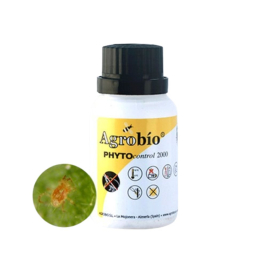
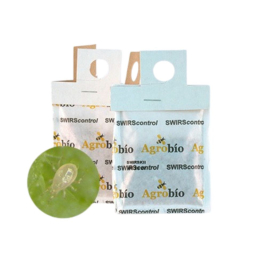
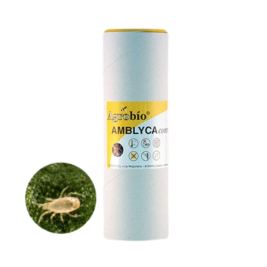
An alternative to these treatments is biological control using predators. We recommend for spider mite control: AMBLYcontrol, PHYTOcontrol and SWIRScontrol.
Thrips

Small elongated insects between 0.5 and 3mm that suck sap and transmit viruses to the plant.
We can observe small yellow spots on the leaves where they've bitten, plus a shiny trail on the leaf surface. Very common in indoor grows.
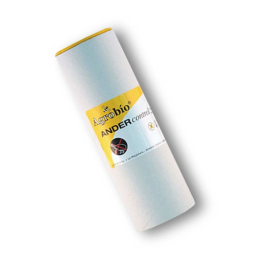
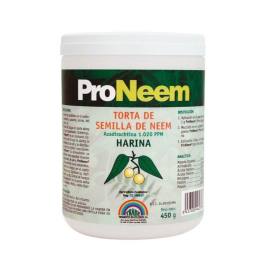
To eliminate this cannabis pest, we can use synthetic contact insecticides such as Epik or Cythrin Garden, or broad-spectrum natural insecticides that work on contact, such as Tec Forte or Neem Cake. The biological control alternative is AMBLYcontrol, ORIcontrol and SWIRScontrol.
Whitefly

Small insects just 2mm in white colour that suck sap from the underside of leaves. They lay their eggs on the underside of leaves and their life cycle is temperature-related.
| It doesn't kill the cannabis plant, but it weakens it and can encourage the appearance of fungi. |
To combat these pests on cannabis, we can use synthetic contact insecticides such as Epik, or broad-spectrum insecticides that work on contact, such as Tec Forte, OleatBio or Neemazal. You can also treat your plants with predators such as ENCARcontrol and SWIRScontrol.
Aphid

Small insects 1 to 3mm, located on young shoots and forming dense colonies. They suck sap from the plant and weaken it, secreting a white and sticky liquid that promotes the appearance of fungi.
| It usually doesn't kill cannabis plants, but it weakens them considerably, preventing their proper development. |
To address this pest, we can use synthetic contact insecticides, such as Doble-Max (tau-fluvalinate 24%) or Cythrin Garden, or broad-spectrum natural insecticides that work on contact, such as Oleat Bio or Tec Forte. The alternative to phytosanitary products is APHIcontrol, a voracious fly capable of eliminating aphids.
Caterpillar

It's one of the worst pests for outdoor growing, small caterpillars that eat our crops.
When plants start showing their first pre-flowers, these insects lay their eggs on them.
By harvest time, we'll see small holes in our leaves and buds.
| Moreover, they typically trigger the appearance of botrytis, which at this stage of cultivation will be almost impossible to eradicate as it will be completely infected. |
To combat it, we'll use Cordalene, a product based on Bacillus Thuringiensis that's very effective against this type of pest.
Fungus gnat or soil fly

This is a very common pest on cannabis plants and is difficult to eradicate. A small fly that lives and reproduces in the substrate and feeds on plant roots, damaging them.
Its eradication is complex and to detect it in time, it's recommended to use Yellow Traps where they'll get stuck.
To eliminate them, you can use NEMATOcontrol, a harmless and very effective product for eliminating them.
How to combat cannabis insect pests?
To combat insect pests that damage cannabis harvests, the insecticides we use can be specific for a particular pest or can be broad-spectrum, covering various pests.
Regarding their mode of action, they can be classified as:
- Systemic: plants absorb the product through their vascular system, roots, etc.
- Contact: the active ingredient must come into contact with the insect to be effective.
- There are products that combine both modes of action.
There are more natural products that respect the plant and others that are more aggressive, synthetic ones. There are other products such as Neem oil (Neemazal) that can be used both via foliage and through fertigation.
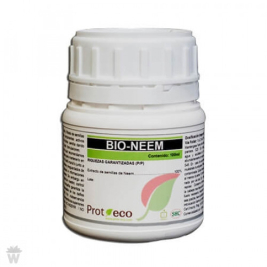
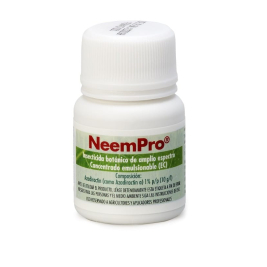
The Neem oil is one of the natural insecticides that's beneficial for our plants. It acts as an insect repellent and also provides benefits to the plant. It can eliminate pests such as aphids, grasshoppers and mites. Moreover, it respects beneficial pests, such as ladybirds or earthworms.
It's an ingredient in many insecticides, but its natural use diluted will always be better, although this won't be enough for pests already widespread.
The most common fungal pests on cannabis
Powdery mildew

One of the most common fungi in cannabis cultivation. It's a pathogenic fungus that can affect indoor or outdoor crops, the latter especially during periods of higher humidity.
Once the fungus penetrates the buds, they're no longer fit for consumption as it can cause health problems, especially pulmonary ones.
It's easy to recognise, as it initially appears as a kind of whitish powder on the upper part of the lower leaves of the plant.
The patches will become increasingly intense and increase in size. Eventually, when it reaches the stems and buds, this plant will no longer be fit for consumption. The sooner we identify it, the more chances we'll have of eradicating it.
| The ideal way to combat this pest on cannabis is to keep humidity levels low, check that the lower leaves are in good condition and that they receive good ventilation. |
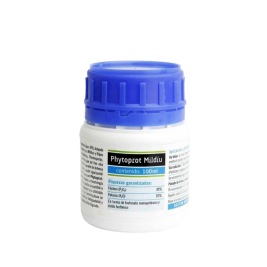
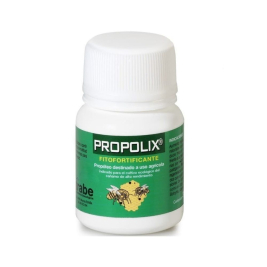
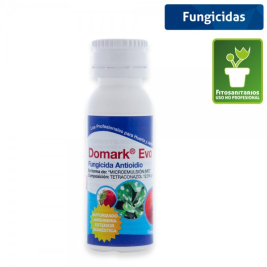
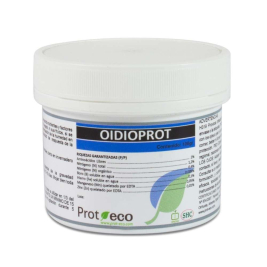
There are products that will help prevent its appearance, such as propolis, horsetail and Oleat Bio. On the other hand, if the fungus has already appeared, we can use Domark evo or Oidioprot.
Botrytis

Also known as grey mould, it's very common and damaging, appearing when humidity and temperature are high.
It can appear anywhere on the plant, turning it brown or grey and gradually necrosing it. It may form grey mycelium and the fungus itself will become whitish, turning greenish.
It spreads easily and can destroy your crop within hours.
| We can prevent it by keeping humidity below 50%, maintaining a well-ventilated environment, and keeping the crop clean, sterilising the materials we use. |
Also, when removing dead leaves, you must do so correctly, completely removing the petioles, the junction of the leaf to the stem. This fungus can appear if harvest is carried out in unsuitable conditions and especially if the buds are compact.
We must prune the infected parts. For Botrytis, propolis or horsetail are preventative. If the fungus has already developed, we must use other products such as Botryprot or Beltasur.
Downy mildew
It's one of the most dangerous pests as it can go unnoticed. It can grow inside the plant, on leaves or stems and is only noticeable when the pest is in an advanced stage.
This fungal pest is easy to identify. You'll observe white and yellowish patches on leaves that have an oily texture. It spreads through spores, especially when temperature and humidity are high.
| Don't confuse it with powdery mildew, as this one is not superficial but penetrates the plant's tissues. |
As with other pests, the best way to combat this cannabis pest will be with good ventilation, humidity and temperature control and maintaining hygiene measures.
On the other hand, to prevent, we can use Propolis, Oleatbio, Horsetail, Tricare, Simbiotic and Microbiome. If the plant is affected, it's best to remove damaged vegetation areas and use Belpron.
Pythium

A group of root fungi that is easy to find in seed beds and in indoor or greenhouse crops.
It can enter the seed when we wet it to germinate, which can prevent germination from occurring.
On the other hand, it can attack the stem of our plants when it narrows at neck height. It spreads through spores when temperature or humidity increase.
| If we maintain humidity and temperature conditions, our hygiene conditions and the substrates we use under control, we should be able to prevent it as it's a root rot. |
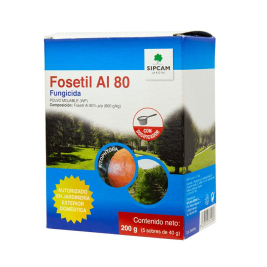
It can be prevented with horsetail, propolis, Tricare, Simbiotic or Microbiome. If infection has occurred, we can use products such as Belpron or Fosetil-Al.
How to combat fungal pests on cannabis?
As we've been able to see, there are a series of preventative measures for fungi, some valid for all types of fungi, such as horsetail or propolis, and others for specific pests, such as Microbiome, Tricare, Simbiotic or Oleatbio.
On the other hand, if your plant has already been affected, you'll be able to use a wide variety of products mentioned above, also available on our website.
Cannabis flowering pests: how can we combat them naturally?
Cannabis plants are very sensitive and need specific care, and a pest can easily destroy them.
Most pests during a grow appear during the flowering phase.
At this stage, applying treatments is more complicated and should always be done during the first few weeks to avoid negative consequences, such as secondary pests or failure to meet safety deadlines set by manufacturers.
The majority of preventative measures to combat the appearance of cannabis pests we have in the catalogue are 100% natural and have no safe consumption period.
However, all those synthetic products have a safety period for human consumption that you must strictly comply with.
During the flowering stage, you can apply treatment via foliage during the first few weeks, after which it will be advisable to use systemic insecticides via irrigation or biological control.
Biological control uses pest predators to combat and eliminate common pests in all crops. They're sent alive directly from the factory to ensure their vitality and efficacy.
Comments
Leave a comment