
Signed out
See you soon.
LED Grow Lights for Indoor Growing
Indoor grow LED lights with efficiencies of 2.5 to 3.4 µmol/J, from supplementary bars to 1000 W luminaires for CO₂ rooms. Brands like Dimlux, Gavita, Lumatek, ThinkGrow and Sanlight.
Featured in LED Grow Lights
-

-
-
-
-

-
-
-
-
-
-
-
-
-
-
-
-
-
-
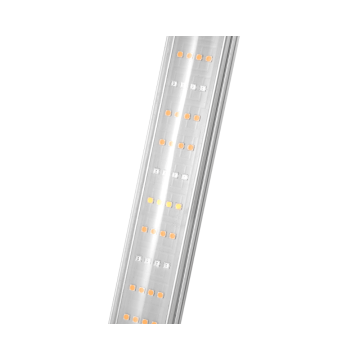
-
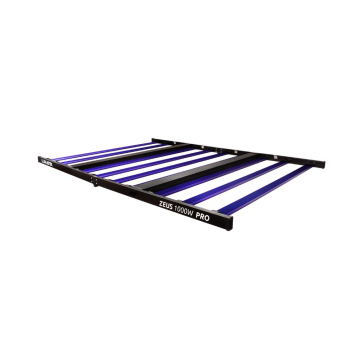
-
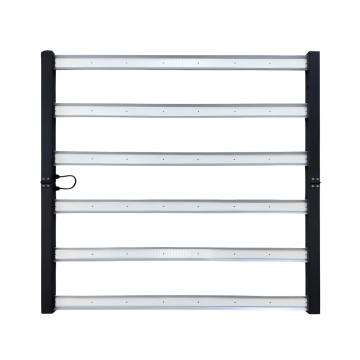
-
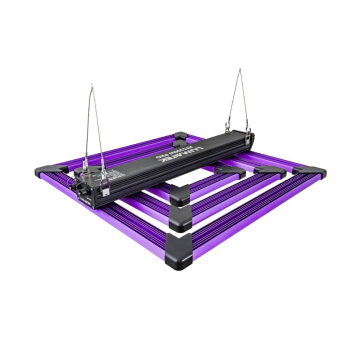
-
-
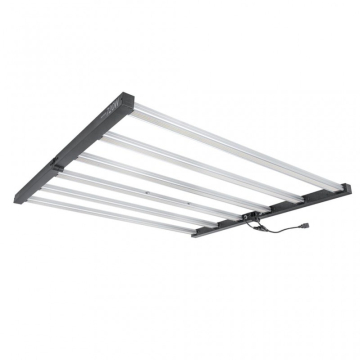
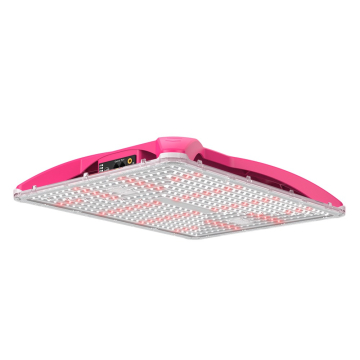
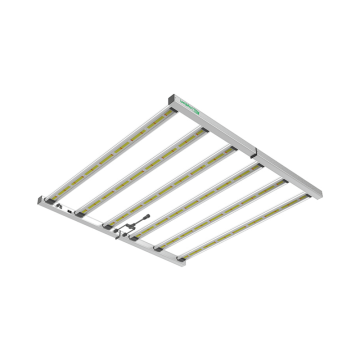
In a grow LED light there are three important figures: the efficiency in µmol/J, the PPFD it delivers at working height and the coverage area it illuminates uniformly. Power in watts, which is usually compared first, only indicates consumption. Two luminaires of 720 W with efficiencies of 2.5 and 3.4 µmol/J deliver a 36 % difference in light with the same electricity bill.
How to choose a grow LED light
Sized in this order:
- Coverage area and uniformity. A 720 W luminaire covers uniformly between 1.2 × 1.2 m and 1.5 × 1.5 m. For 1 m² modern LED of 400–500 W is enough; below that flowering falls short at the edges.
- Target PPFD. 400–600 µmol/m²/s in vegetative and 800–1,000 in flowering. Above 1,000 only pays off with CO₂ and climate control.
- Efficiency (µmol/J). This is the figure that separates ranges: below 2.5 is old technology, 2.6–2.9 is the current standard and from 3.0 you're in the premium range. Each tenth pays for itself in electricity if you grow continuously.
- Dimming and spectrum. The dimmable driver lets you increase power by stages, and models with far-red or NIR shorten the flowering response.
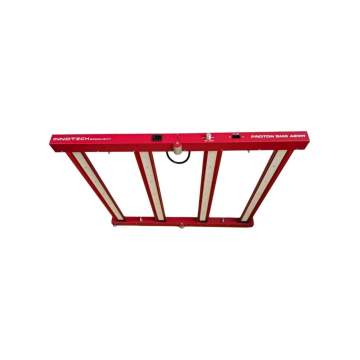
- Heat dissipation. Bars dissipate better than compact panels and allow you to bring the light closer, which matters in a low cabinet.
Real efficiency in our catalogue
We publish the figure for each luminaire because it's the only way to truly compare:
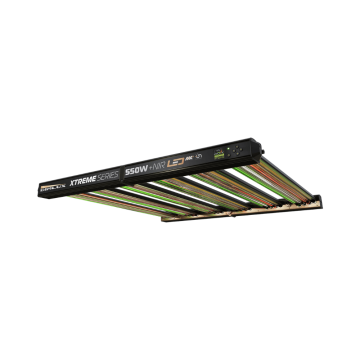
- 3.4 µmol/J — Dimlux Xtreme 550W and 800W with NIR MKII, the top of the catalogue.
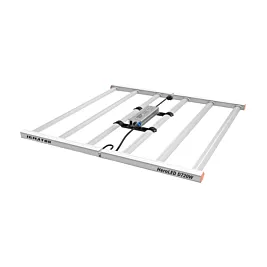
- 3.25 µmol/J — Ignator HeroLED D720W.
- 3.2 and 3.14 µmol/J — Equalize Level RW II 740W and MJ3 Venom F5 Revolution 720W.
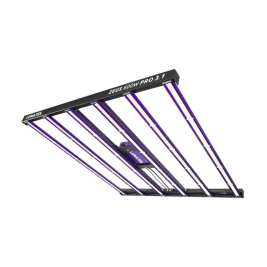
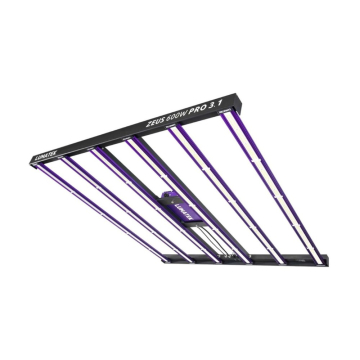
- 3.1 µmol/J — the Lumatek Zeus PRO series (465W, 600W, 1000W EVO and Xtreme), Lazerlite Pro 1080W and Cosmos Pro 720W Elite.
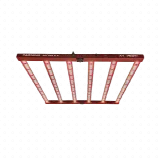
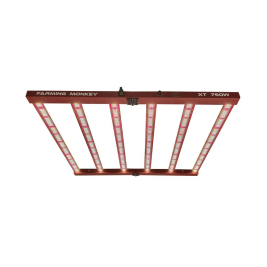
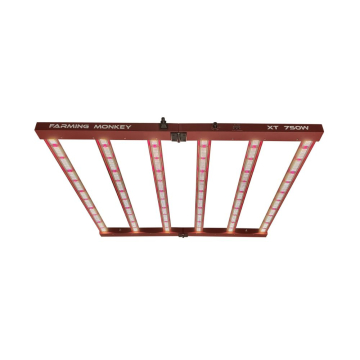
- 2.8–2.9 µmol/J — Solux Vega Pro 720W, Farming Monkey XT 750W, Powerlux Streetlight and ThinkGrow Model-H Plus.
- 2.5–2.7 µmol/J — entry-level options like LUMii Black 720W or Lumatek Attis.
LED lights by power
If you already know the power you need, go straight in: Grow LED Lights 720W are the standard for a 1.2 m² cabinet and double tent, and Grow LED Lights 1000W cover a room with CO₂ and continuous production.
LED light brands at Growlobby
We stock professional and entry-level ranges in the same catalogue. At the high end, Dimlux, Gavita with the Pro LED 1700e, Sanlight with the EVO series and ThinkGrow with their Model-I and Model-H. In the best efficiency-to-price range, Lumatek, Lazerlite, Ignator HeroLED, Solux, Powerlux and Vanguard Hydroponics.
Supplementary LED: far-red, UV and under canopy
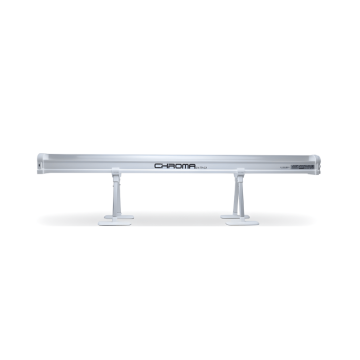
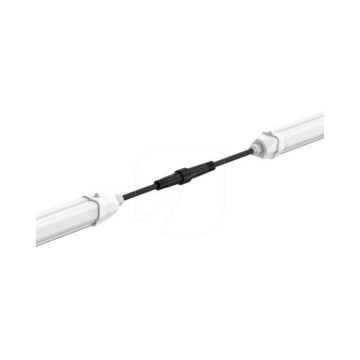
Beyond the main luminaire, the catalogue covers support lighting: far-red bars to shorten the transition to flowering, UV for the final weeks, under canopy to light the lower part of the plant and low-consumption bars for cuttings and propagation. These are a complement to a main system, not a replacement.
Size the space and PPFD first, then choose efficiency based on how many hours a year you'll have the light on. The entire Lighting catalogue also includes compatible grow cabinets and the lighting accessories to hang and connect the system.
Frequently asked questions about LED Grow Lights
How many watts of LED do I need per square metre?
Between 400 and 500 W of current LED per m² during flowering. With efficiencies of 3.0 µmol/J or higher you can stay at the lower end of the range and maintain the same PPFD.
What does µmol/J mean and why does it matter more than watts?
It's the useful light the luminaire delivers for each watt consumed. At equal consumption, 3.4 µmol/J produces 36% more light than 2.5, so it determines both harvest and your bill.
Can an LED replace a 600 W HPS unit?
Yes, and with less consumption and less heat load. If you're coming from HPS bulbs, bear in mind that lowering the heat changes humidity management and you may need to adjust your climate control.
At what height should it be placed?
They are usually placed between 30 and 100cm above the plants. It depends on the space and PPFD of each model, environmental conditions and the plant's growth stage.
Do I need a ballast?
Normally not, except in cases clearly indicated. LED lights come with an integrated or external driver included. Ballasts are for discharge equipment.
