
Conventional Agriculture vs Organic Agriculture
Conventional vs organic farming: cost, environmental impact, soil and biodiversity differences, and why cannabis cultivation favours organic methods.

One of the great dilemmas that many growers face when entering the agricultural world is whether to opt for conventional or organic farming. Undoubtedly one of the great debates among growers, and one in which of course everyone has their own point of view.
From Growlobby we don't want to change your mind or position you on one side or the other, we simply want to try to inform you what they are and how organic and conventional agriculture differ, and continue trying to help you understand our sector better, providing you with the necessary information for good plant care, and so you can control everything you need to know about cannabis fertilisers, which turn out to be so important in the cultivation of our beloved plant.
Advances in cannabis agriculture
Furthermore, we are going to present you with three star natural products, of an organic nature, that can help your crop in a surprisingly positive way, at a very economical price. We're giving you a preview of one, in case you'd like to take a look. It is Simbiotic, a probiotic that contains beneficial microorganisms capable of reducing nutritional input, substantially increasing production and protecting your crop from unfavourable conditions. This complete product can be ideal for carrying out improvements in agricultural performance, increasing the availability and absorption of nutrients, fixing atmospheric nitrogen, improving phosphorus solubility and contributing to potassium mobilisation. We'll present you with a couple more products later, as for now we're going to focus fully on agriculture and try to get to know it a little better in a simple way.
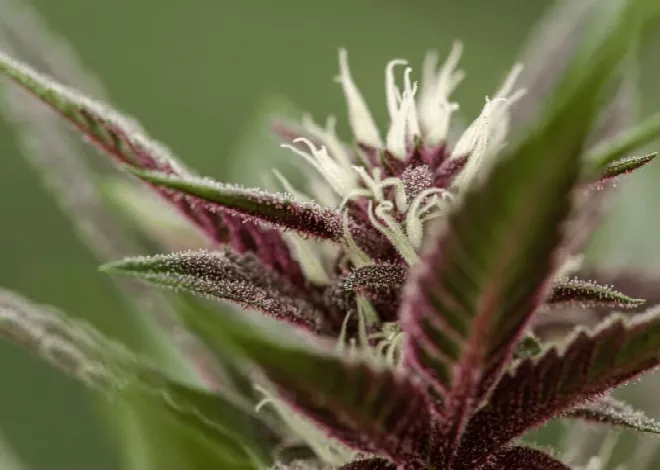
The organic agriculture is a production system whose main characteristic is that it tries to use the available resources of the growing space as much as possible, giving special importance to soil fertility and biological action, and making maximum use of available renewable resources. Furthermore, it involves not using synthetic fertilisers or pesticides, for example you can use fertilisers with microorganisms. If we talk specifically about the cannabis sector, many growers don't want their flowers to lose aromas, flavours or smells, and feel more reassured in this regard by using organic cannabis fertilisers.
The conventional agriculture is considered an artificial production system, which is based on the consumption of certain goods that are considered external to the environment and growing medium, such as the use of chemical fertilisers, herbicides, etc. It aims for efficiency and profitability through intensive plantations.
How different is traditional agriculture from organic?
We're going to try to explain to you objectively the major differences between traditional and organic agriculture, addressing the different main points.
Economics: Costs and income in the short and long term. Economic profitability of cultivation
It's important to start by noting that depending on whether we focus on the short or long term, we'll get different results or opinions. In the short term, the profitability generated by conventional agriculture is obviously greater, as it requires fewer care measures and allows the use of a greater number of products, which facilitates the process. If we look in the long term, it is then that organic agriculture, more recently appearing in the sector, starts to deliver more powerful results, also at an economic level. The organic system is already growing and beginning to function automatically and generate income.
Moreover, and referring to costs, organic agriculture uses its own waste to generate fertilisers and nutrients, and uses its own medium to improve its yield, so it saves a lot in costs compared to traditional agriculture, which needs fertilisers and pesticides for its operation.
Machinery and energy
The cost of machinery and fuel in traditional agriculture is high, as we need means such as tractors and harvesters both for sowing and harvesting the product, which generates fuel expenses. In organic agriculture we also of course have energy costs, but these try to be reduced and renewable energy models are sought, which is also of course less polluting. This, on the other hand, requires a substantial initial outlay, although it allows over time to take advantage of the factors of our environment and try to be self-sufficient as much as possible. The energy return in organic agriculture is by far superior, as we get more energy than we put in.
Environment: Pollution and care for the surroundings
As is obvious, conventional agriculture is much more polluting, due to the use of chemical fertilisers, herbicides or pesticides, something that organic agriculture tries to eliminate completely, as well as trying to use renewable and less polluting energies. Chemical fertilisers pollute soils and water, and the air is also more harmed by traditional agriculture, generating higher levels of air pollution.
Moreover, it's relevant to talk about biodiversity and the environment, where organic agriculture is much more respectful, and seeks to care for any type of plant or animal however insignificant, whilst conventional agriculture in many cases eliminates them if they threaten its production, or as a consequence of the use of certain products harmful to the environment. In the organic model, the existence of all types of species is what gives meaning to that model, to generate a certain self-sufficiency.
Labour and related expenses. Mechanisation of tasks
The cost of labour is much higher in organic agriculture, which requires a greater number of workers for a simple reason, and that is that the more widespread use of machines in conventional agriculture allows the mechanisation of processes, making them faster, repetitive and mechanical, and therefore facilitating their carrying out, whilst in organic agriculture the process is slower and more manual, which shoots up labour costs.
Nutrients, water, soil depletion and influence on the final product
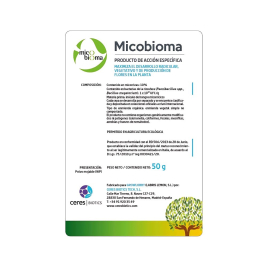
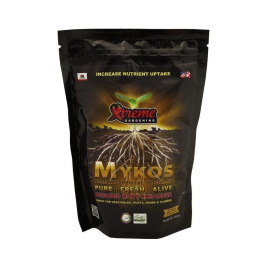
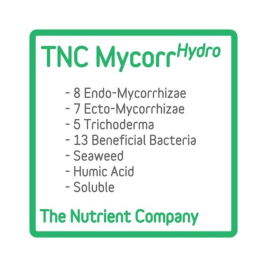
Traditional agriculture needs to continuously fertilise the soil, in fact, it increasingly needs a greater measure of products, as the soil is more depleted and has fewer nutrients, which leads to over-fertilisation. In organic agriculture the process is the opposite, as we increasingly have a soil with greater biodiversity, richer and with more nutrients, which regenerates the soil and does not destroy the surface layer where most of those nutrients our plants need so much are found. As you'll see, the importance of soil is very great, as is that of the root system, an indispensable and vital element in any crop. Therefore, we also present you with Microbiome, a premium additive rich in mycorrhizae that promotes root development and works as a bio-stimulant for organic and intensive crops seeking to maximise production. It's a 100% organic product and completely water-soluble.
As for watering, in organic agriculture attempts are made to reduce irrigation to zero to reduce costs and save water, trying to get the soil itself to generate its own humidity and water retention conditions, and taking advantage of rainwater. But this can sometimes create problems in very dry and hot climates.
As is logical, the final product is the result of the sum of everything we're discussing, and an organic agriculture product will be more natural and probably healthier and with more flavour, but it will also be more expensive and will stay fresh and last less time without spoiling.
Pests and damage to the crop
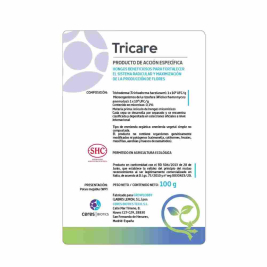
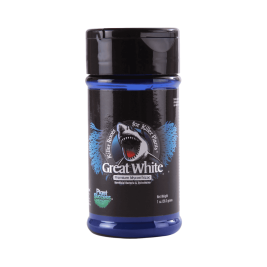
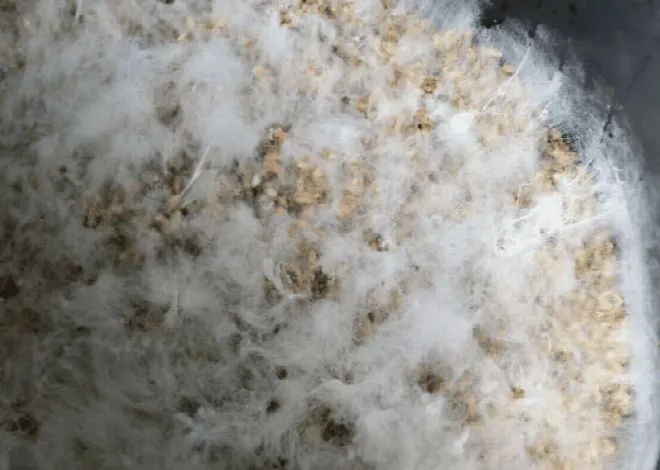
You should know that pests usually affect traditional crops to a greater extent. Organic agriculture has a very powerful natural medium and environment over time, which facilitates the fight and prevention of pest appearance in the crop. That said, in case of their existence, the conventional agriculture model facilitates to a greater extent the fight against elements harmful to the crop. At this point, we'd like to tell you about Tricare, a concentrate of beneficial fungi designed to protect the root system of plants, which contains Trichoderma harzianum, a highly invasive fungus with an important protective function in crop development. Tricare acts against pathogenic fungi, nematodes and other harmful diseases.
Organic and conventional agriculture
So, as we've seen, organic agriculture has an approach that advocates for healthy products free from chemical components, carrying out maximum care for nature. A holistic production management system that seeks to improve the environment and care for biodiversity by encouraging perfect soil use. There are even controls to ensure that the requirements are met when a crop is considered organic, preventing fraud and reviewing all details, from the soil to packaging, including that no chemical products are used.
So, the major difference we consider is dispensing with chemical products on the part of organic agriculture, not using pesticides, herbicides or chemical fertilisers, and caring for the environment.
If you need more information, don't hesitate to contact us, to find out what works best for your crop or for any questions you have about the agricultural and cannabis world.



Comments
No comments yet
Be the first to comment on this article.