
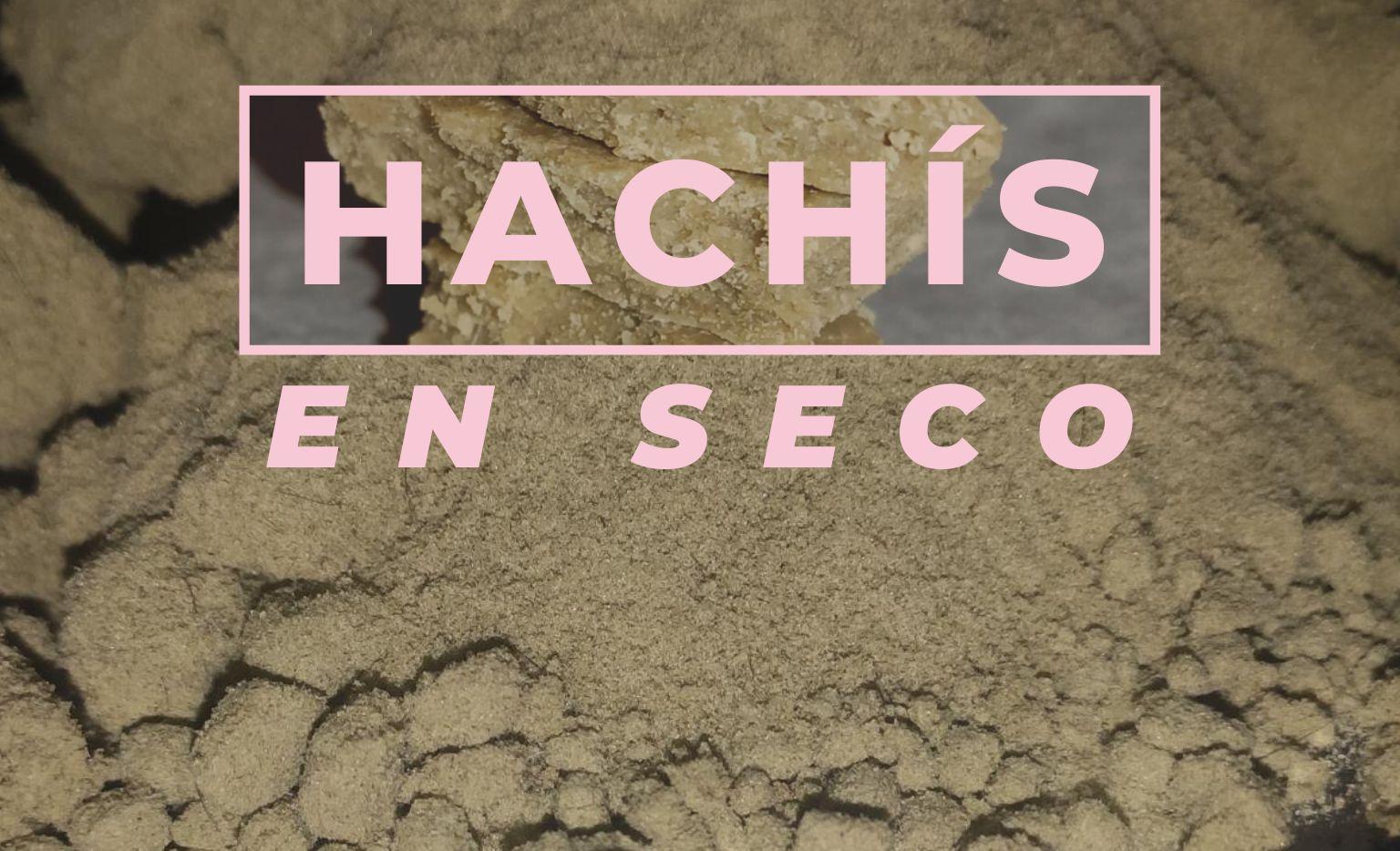
Steps to Perform a Dry Hash Extraction
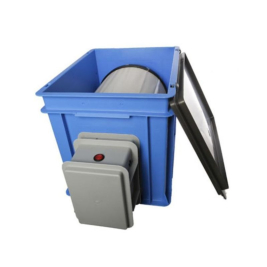
There are two methods for separating resin: dry extraction or "Dry Sift" and ice water extraction or "iceolator". Both are effective, but in this case we'll focus on dry extraction. You can find various machines for resin extraction in our grow shop.
How to extract hash dry?
Firstly, dry extraction or "Dry sift" is the method used to mechanically separate trichomes from plant material using sieves, friction or kinetic energy, which facilitate the separation of trichomes from plant material. This method, taken to its extreme, is considered by many "connoisseurs" to be the best, since the trichome doesn't come into contact with any substance foreign to cannabis, so the most volatile terpenes aren't lost, as can happen with iceolator, where wetting the trichomes can cause very volatile oils to be retained in the water or evaporate as it dries.
If what you're looking for is BHO online we have everything you need to make it on our website and in our physical shops.
Dry hash sieving methods:
Shakers:
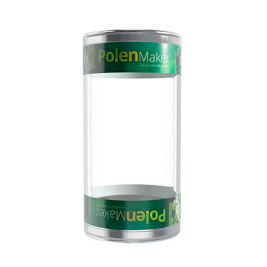
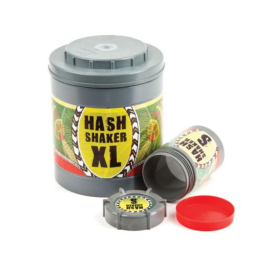
Relatively small sieves made up of a plastic or acrylic container, generally, with a single mesh that is usually fixed and taut in the middle of it, which ranges from 150µ to 120µ, for example, the Hash Shaker available in three sizes or the Pollen Maker. The purpose of this simple sieve is to fill ¾ of one half of this container with flowers or "trim" that has been previously frozen (we recommend freezing the shaker too) and shake until you get your precious hash on the other side.
For good results we recommend measuring the shaking time of the plant material and even making several passes with different times that will vary depending on the variety, the residual moisture of the flowers, amount of resin or even the grower themselves, as the resin obtained by an expert grower is not the same as that obtained by a beginner.
Extraction bags:
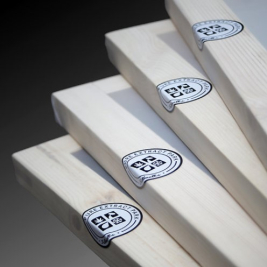
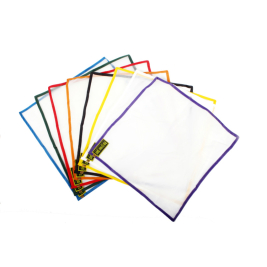
Bags with nylon mesh in different micron sizes from 220µ to 25µ, such as the Pure Extract Park mesh, into which you introduce the previously frozen plant material (we recommend 220µ for plant material) to shake over a flat surface, where we'll collect our hash.
Once we've collected the resulting powder, we can compact it for smoking or leave it as powder as you prefer; or we can filter the resulting powder through mesh with smaller micron sizes in order to clean the powder of impurities and contaminants, thus increasing the final quality of the product, bearing in mind that mesh from 220µ to 160µ is usually used as a filter to remove waxes, plant material and other contaminants from our hash, and mesh from 120µ to 25µ is where we'll collect our different qualities (as well as refine the powder more and more). We'll proceed by introducing the powder into said mesh and what passes through it we'll resift into the next mesh.
For example, we introduce the resulting powder from 160µ (the one that passed through this mesh) into a 90µ mesh, we'll shake without fear, energetically over a flat surface until powder stops coming out, this is an indication that the resulting powder within this mesh has no particles smaller than 90µ or larger than 160µ. The powder that passes through this micron size, that is, what fell on the flat surface, can be discarded, used for cooking, or resifted in a smaller micron mesh. To resift it we'll repeat the operation with the 45µ or 25µ mesh.
We recommend carrying out this process in a cold place if possible to obtain better results.
Dry ice:
Within this technique of separating trichomes using mesh bags of different micron sizes, we can add a "tip" that will facilitate the separation of our initial hash, by incorporating to this technique the addition of dry ice to the bag containing the plant material for the purpose of improving the separation of our glands. Why dry ice? Because this is CO2 in solid state, frozen at temperatures close to -80°C, so this ice goes directly from a solid state to a gaseous state without leaving any liquid or gaseous contaminant in our extraction, helping the separation of trichomes from the flowers/trim.
You have to be careful when working with this type of material as the temperatures are so low that it can burn our skin or damage our eyesight, which is why we recommend the use of glasses (ski/motorbike or similar style) to avoid damaging our eyes with the cold vapour this type of ice releases and silicone or kitchen gloves so you can handle the ice in the best way possible without risk of suffering burns on your skin.
Screens / Dry Sift Screens:
This method consists of sieving our plant material using mesh screens with different micron sizes that allow you to obtain a high-quality extraction. This method comes from Afghanistan, where, unlike Morocco, the hash is separated from the plant by rubbing the flowers over a tight mesh, thus obtaining less plant material in our hash. We can say that this technique is an evolution of the traditional method.
Despite being an old method, it's not very well known and is, so far, the most effective screening method, although it requires patience, time and of course, sacrificing a lot of plant material until you achieve the desired result. To sieve the resulting hash we must use a card to gently move the hash, pushing it together and separating it again over the corresponding mesh, in such a way that some parts will pass through it and some won't. Mesh with micron sizes larger than 160µ are usually used as a filter, discarding what remains on top of them and refiltering what passes through their fabric through mesh with smaller micron sizes. It consists of making broad wrist movements, bringing together and separating our hash so it refines properly.
In the end you need to achieve a result close to 99.9% glandular heads. This technique is very precise, but requires patience, cleanliness and good workmanship, which is why we recommend the use of brushes and nitrile gloves.
Static tech:
This technique is usually combined with the use of Dry Sift Screens, as once the powder has been filtered through the mesh we can refine it to a higher level with static electricity, achieving a concentration of 99.9% of trichome heads in our hash in record time.
This technique consists of generating friction on the screens (by rubbing a roller wrapped in baking paper, even a video or CD case wrapped in baking paper, an inflated nitrile glove or rubbing the glove with your hand inside it, always proceeding very gently over the screen) since the fabric of these is synthetic and taut, this friction generates static electricity that causes the trichome heads to separate from the stems that join them to the plant, along with other small particles of plant material, which don't secrete any substance and are considered impurities within our dry sift.
Beating:
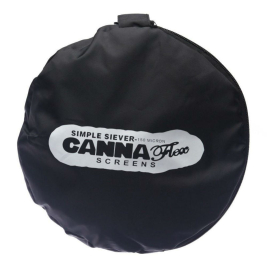
A very simple technique, used in the Rif mountains in Morocco, it's similar to playing a drum as the resin is separated from plant material by beating this green material with sticks gently but energetically, as if it were a drum. For this we'll use a container similar to a salad bowl, preferably larger than one of these, although that will depend on the tastes of each person and the amount of plant material to sift; we'll need a Dry Sift mesh sieve between 220µ and 150µ which we'll use to cover the bowl and put our starting material on top of it, tensioning the mesh well to avoid slack when sieving, as this will only mean that the result isn't what it should be, either by increasing impurities, or simply by reducing the yield that should result from part of the resin getting trapped in these slack areas. There are solutions like the CannaFlex designed to provide a base on which to work this technique.
There are people who wrap the mesh once around the bowl and others who wrap it up to three times, or even more, in order to get a more refined resin than if you wrapped it just once; and finally we'll need a piece of plastic, or similar, with which we'll cover the plant material to proceed to beat it with sticks we have at hand. As always, we recommend doing this with the plant material previously frozen and in the coldest place possible to make it easier to separate our precious glands.
Temperature:
The best way to work with dry hash is in a cold room with temperatures between 0°C and -10°C, where the glands freeze easily becoming a stable powder that doesn't break or stick to the mesh we use to carry out our extraction. If you don't have the possibility of using this type of room, given their high cost, we can use the temperature of winter nights or even help ourselves with air conditioning, which doesn't bring the temperature as low, but can be useful if we have no other way to get cold.
Another way to get the desired cold is to work in freezers or cold boxes, but you have to take into account that if you have these open for a long time they can break because you have to be careful with times to avoid these machines breaking down. Taking into account that we work with quality material and taking 22°C as "ambient" temperature, we can say that at this temperature hash is very difficult to handle, the glands melt and sometimes it becomes impossible to separate them and refine the powder.
From 15/14°C onwards, the glands begin to harden, and the powder starts to be more or less stable, although not as stable as it would be at temperatures below 0. From 8°C to 0°C the resin begins to be a truly stable powder, even when dealing with varieties with especially sticky resin; and finally, from 0°C to -10°C, each trichome individually would be as hard as stone, allowing us to handle the powder without fear of it melting or sticking to the mesh or even to each other.
In the case of iceolator, despite the use of ice, the temperature of the room you work in will determine how long the ice lasts without melting, which will translate into greater or lesser efficiency during the separation process. It will also improve efficiency when collecting the resin as at lower temperatures the trichome is more stable, so a low temperature can make it easier for us to collect our trichomes.
Starting material:
Starting material may well be one of the most important points when carrying out any extraction, as it's not the same to use high-quality flowers or flowers that are more mediocre; just as it won't be the same to use first-class flowers or trim from these; just like the degree of humidity/dryness of the starting material. One thing we have clear, "Fire in, Fire out".
The difficult thing is getting optimal results with mid-grades, which is possible but requires a lot of experience and knowledge of the process. Top grade: obviously working with quality flowers, the result will be quality, especially if the way of proceeding is appropriate depending on the situation. When we talk about situation, we're referring to the state of the starting material, ambient temperature (which I've mentioned earlier), genetics, etc.
State of material: The state of the material is what will largely guarantee the result we obtain. As regards the state of the material we distinguish 3 valid states for making any extraction:
Dry: dry material, crispy to the touch, the resin comes off easily, although, in some cases, the resin may lose too many qualities if the drying is excessive, with much of the most volatile terpenes evaporating, as well as losing a considerable part of THC, since this has turned into other cannabinoids with other different properties, such as CBN with a more narcotic effect (In this case THC would lose a carbon molecule and this would be replaced by a hydrogen molecule, this process is called decarboxylation), or CBD with wide medicinal value (into which it's transformed through an oxidation process). The advantage is that the trichome, being drier, detaches better, and by not "greasing" as much the yield is quite high, due to the fact that we don't lose trichomes in the process, and less so if the material is previously frozen.
Semi-fresh: "In the middle is virtue". This point of the material would be ideal for the vast majority of extractors, since those who work cannabis at this stage are looking for maximum quality and considerable yield. It's not as easy as putting grass that's half-dry, then freezing it and that's it, you have to work so that the grass is dry, but without losing the sponginess and moisture that will keep our trichomes sticky and fragrant.
Working this material without losing yield is difficult without a cold room, as the green material thaws easily to the touch, so we have to work quickly keeping good timing.
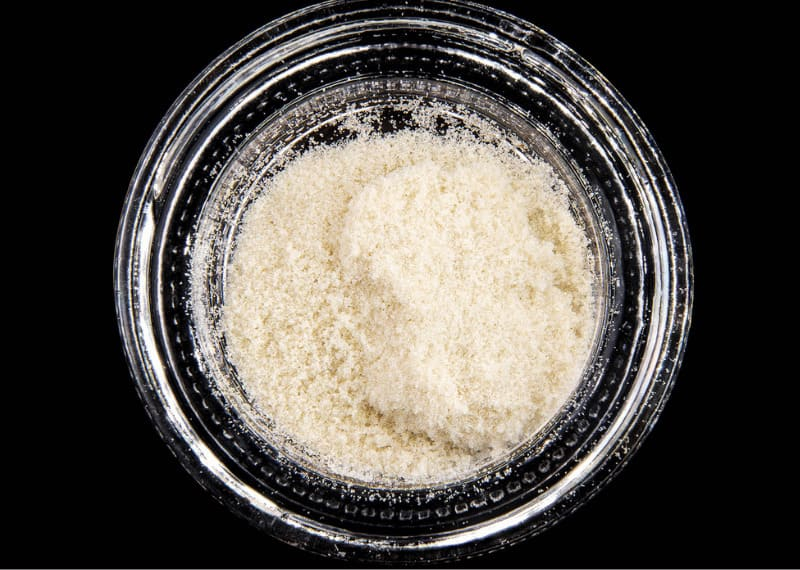
The result after refinement taken to the maximum, is usually a powder, which at room temperature ends up becoming compact or even melting, with a strong smell and little stability if not in the cold.
Fresh/Frozen Sift: This state is almost impossible to work without a cold room, as the powder that results is very sticky even at temperatures between 10°C and 5°C, it's very fragrant and if not treated properly it can still harbour chlorophyll that will affect the taste and appearance of the resin, which is why it's advisable to practise until you find what best suits your tastes.
Genetics: when you hear "This is a genetics for making hash…" it doesn't refer to there being a label that defines it that way, there are several aspects by which we could qualify a plant as a suitable plant for getting hash from it. With any cannabis plant, it's viable to make hash, but we don't get the same results with all of them.
What to look for in a plant to make hash?
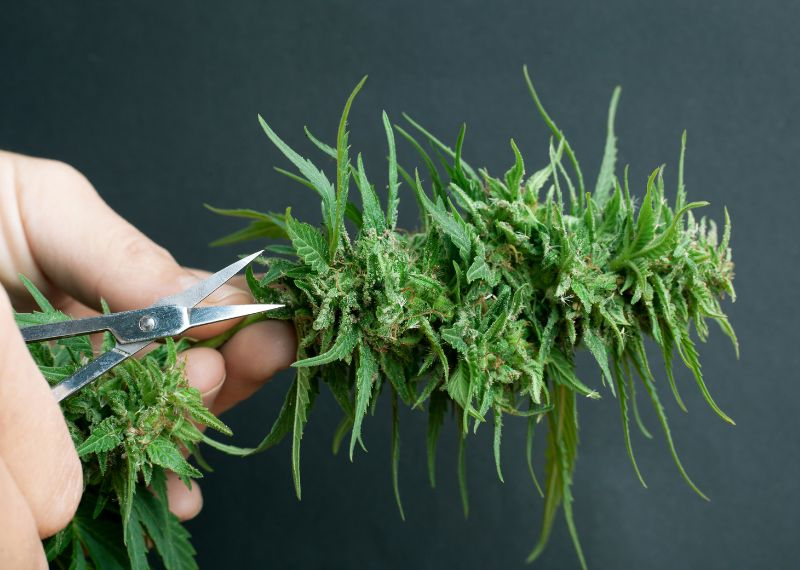
Amount of resin: the main indicator when choosing a variety to make hash, or any extraction, is the amount of resin on the flowers/trim, which will largely determine the final result in terms of amount of hash per gram of green material. Although often the amount of trichomes doesn't always ensure the amount of final hash, as there are trichomes that don't secrete any substance, so they would only increase the impurities in our hash and in the same way, when we clean that hash and collect only what we're interested in, we get a ridiculous amount of what could be said to be "worth it", which is why it would be good to observe through a magnifying glass the type of trichome that predominates in those flowers, before anything else.
Smell: another highly valued thing, although very subjective, is the smell of the flowers or resin. One of the most valued aspects by those who dedicate themselves to extractions is the smell that their work presents, which serves as a letter of introduction. Generally strong and penetrating smells are the most sought after, although there are people who prefer more intermediate smell profiles, not so cloying.
Type of trichomes/size/Shape: another very important aspect when selecting a genetics, or flowers, from which we'll get hash, will be the type of trichome, by type I don't only mean whether it's a stalked glandular-capitate trichome, which are the most sought after by extractors (sessile and bulbous too, but to a lesser extent), but the size of their heads, the larger the head size the more cannabinoids and terpenes the trichome will have; the thickness of the cell wall that forms the head of the trichome is another point to take into account regarding trichome structure, as a thin cell wall means that the trichome is weaker and more sensitive to pressure, while a thicker cell wall, on the other hand, will result in harder heads more resistant to pressure, especially at low temperatures. It's not a determining point, but it's something to keep in mind to proceed one way or another.
Flavour: Another of the most important factors and the last on the list, is flavour, since in the end, every hash or cannabis consumer is going to taste that resin in which they'll perceive some aspects or others regarding flavour, which may catch their attention more or less and will be determining when it comes to generating the need to repeat that flavour or not unconsciously in the mind of that consumer. so we can say that this evaluation criterion when choosing would be the most important along with the amount of resin, since in the end it's the one on which depends whether our resin is good.
Is it good to press pollen dry?
This depends on the final result you're trying to achieve, the product is the same. The product develops different nuances depending on whether it's pressed or not, what's clear is that there are people who consider pressing it a mistake and people who consider the opposite.
When you press it the trichome breaks and releases its oils, the nucleation process occurs and those oils oxidise and mix, plus, it loses much of the water that trichomes contain inside. Therefore, the nuances will be stronger than without pressing. The colour gives the impression of more purity and in a vaporiser you'll be able to differentiate the nuances less.
Without pressing and vaporised we'll be able to differentiate the nuances of the chosen genetics better.
On the other hand, if you're looking for a reduced iceolator price we invite you to visit our website to make your own extractions at the best price and with incredible quality.
Comments
No comments yet — be the first.