
Signed out
See you soon.
Buy Rosin Press
Rosin presses hydraulic and manual for solvent-free resin extraction, from 600 kg for personal use to cylinders of 20 tonnes, with heated plates and independent temperature control.
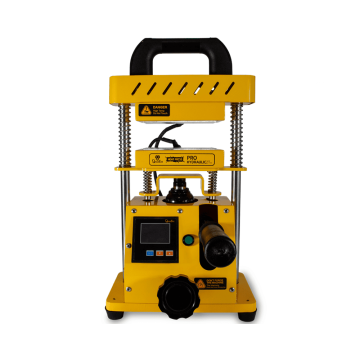
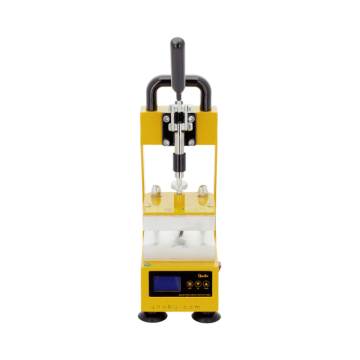
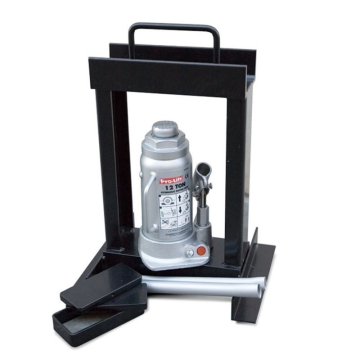
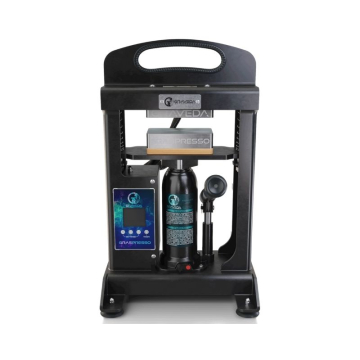
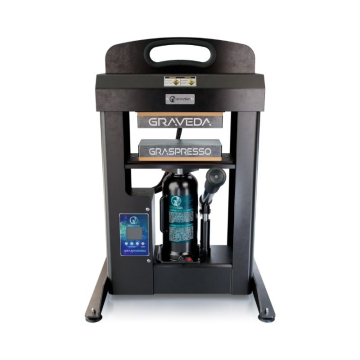
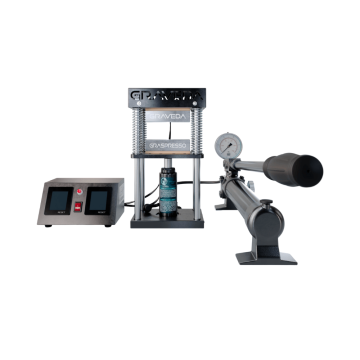
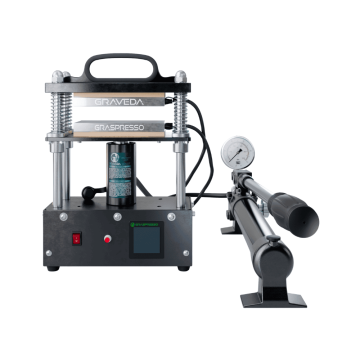
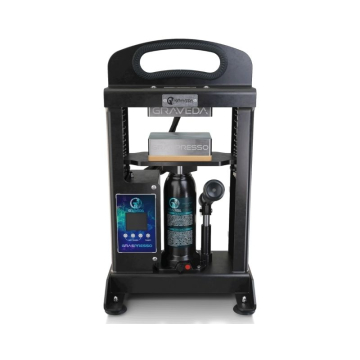

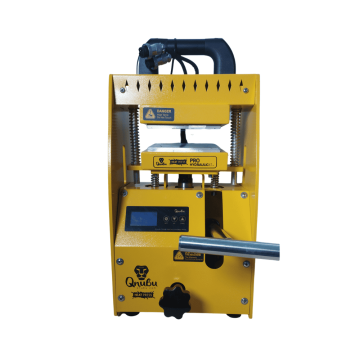
A rosin press works with two variables and no more: heat and pressure. The plates warm the flower, kief or hash whilst the cylinder squeezes, and the resin comes out the edge of the mesh bag without any solvent involved. That's why the press you choose conditions the result more than any other element of the process.
How to choose your rosin press
The tonnes of the cylinder are the first figure everyone compares, and the one most misinterpreted. What matters isn't the cylinder's force but the pressure that reaches the material: the same 10 tonnes spread far less pressure over a 20x9 cm plate than over a 12x6 cm one. A 2 T press with a small plate can yield more than a 20 T press with a large plate if you work short batches.
Decide in this order:
- How much material you press per batch. Up to 5–10 g a 12x6 cm plate is enough. Above 20 g you need 20x9 cm and a matching cylinder.
- Temperature control per plate. Flower calls for 90–110 °C and dry hash drops to 70–90 °C; without fine regulation the terpenes degrade.
- Manual or hydraulic. Manual costs less to start with and works for beginners; hydraulic keeps pressure constant throughout the press, which is where you gain yield.
- Plate accessibility, because every batch is handled with gloves and hot paper.
If you're still deciding whether rosin is your technique, in Rosin Hash: what it is and how to make it we break down the complete process before you invest in equipment.
Graveda and Qnubu Presses at Growlobby
We stock nine models from two manufacturers. In Qnubu, the 600 kg Kompact 2.0 is the manual entry point in the catalogue at 225 €, and the hydraulic 2T and 6T Pro go up to 12x12 cm plates. In Graveda, the Graspresso series covers the jump from 3 T to 20 T with plates from 10x7.5 to 20x7.5 cm, and the EPIC 15T and 20T are the ones that handle continuous pace, with the largest plate in the range at 20x9 cm.
For regular production, the criterion isn't the maximum tonne figure but the ratio between plate and quantity: it's best to choose the plate that covers your usual batch and leave cylinder headroom, not the other way round.
What you need besides the press
No press works alone: every batch uses mesh bag and paper, and the extract has to be collected and stored. All of that is gathered in Rosin Accessories, with Graveda Rosin Paper and Qnubu Rosin Mesh Bags as starter consumables.
Compare plate and capacity before you decide. If you're coming from another technique, check BHO Extractions or Iceolator within Resin extraction.
Frequently asked questions about Rosin Presses
How many tonnes do I need?
For batches of less than 10 g, 600 kg to 3 T with a small plate is enough. 10 to 20 T makes sense when the plate is large and the volume justifies it.
At what temperature and for how long do you press?
As a guide, 90–110 °C for 45–90 seconds for flower, and 70–90 °C in batches of 1 to 3 minutes for hash and kief. Low temperature preserves more terpenes and yields less; high temperature does the opposite.
What yield do you get?
It depends on the starting material more than the machine: flower typically yields around 15–20% and quality hash can exceed 50%. Starting with well-cured material matters more than increasing pressure.
Does a hair straightener work?
It produces resin, but doesn't control temperature or pressure, so the result is inconsistent. It's a proof of concept, not a method.
